

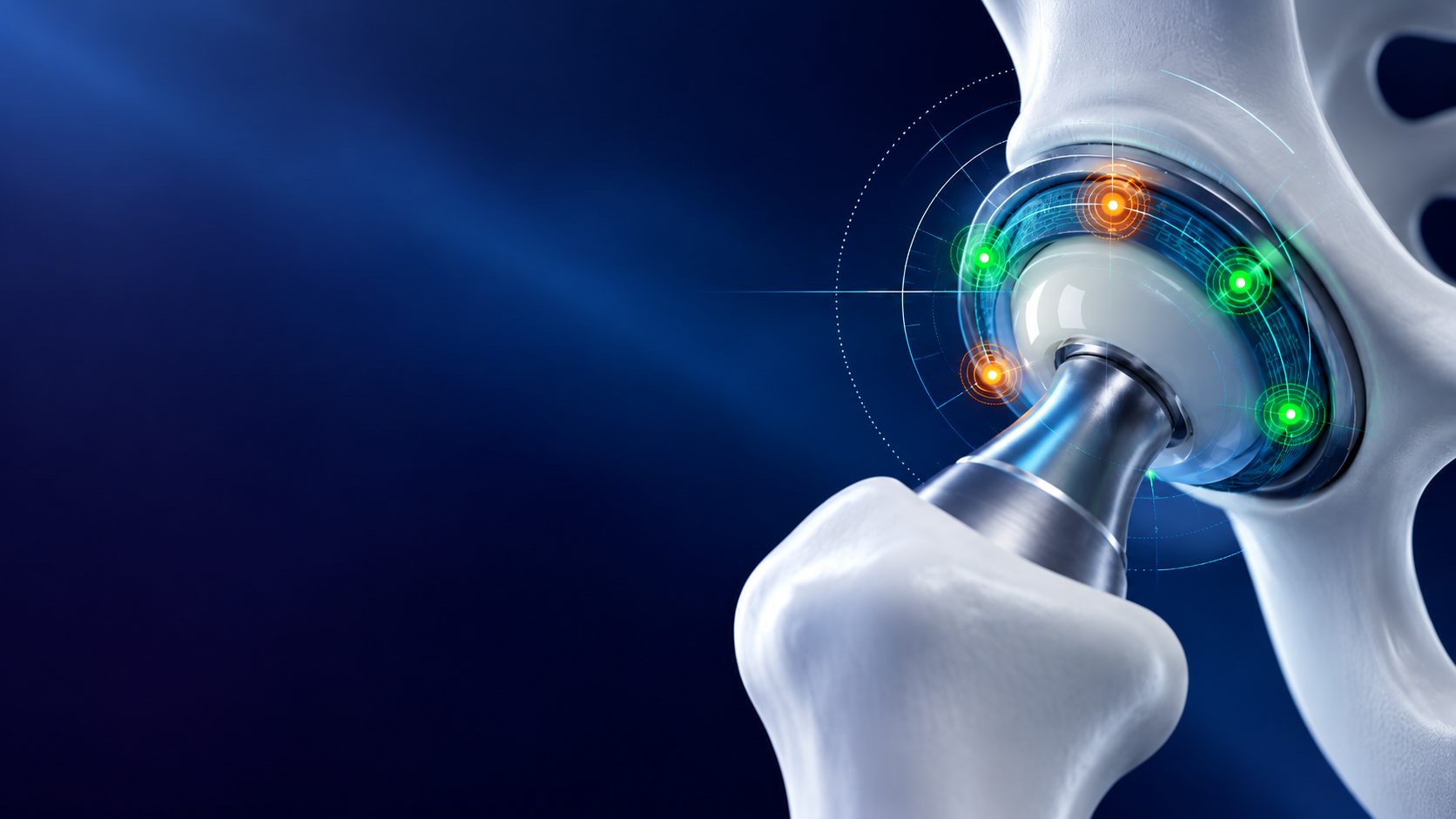
Designed to sense what the eye cannot see.
Explore the science and engineering behind ArtioSense's innovative microfluidic force-sensing technology.
A complex joint.
A different sensing challenge.
Force sensing within a joint must accommodate curved, weight-bearing surfaces. A sensor needs to respond to applied forces without losing the form that makes it useful at the point of contact.
ArtioSense brings microfluidics and additive manufacturing together to investigate that challenge. The foundational research explores thin structures that conform to the geometry around them.
From applied force to measurable change.
The published sensing approach combines microfluidic structures with capacitive sensing. Applied force changes the sensor response, which can be calibrated to provide quantitative information.
Aerosol-jet printing enables the fabrication of customised microfluidic geometries. Subsequent work describes sensor design optimisation and calibration within a model hip implant.
Read the underlying researchSee how load is distributed.
Choose a loading pattern and adjust the applied load to explore how a six-point display can communicate force distribution around the joint interface.
Load shared evenly around the ring.
See how load is distributed.
The sensing liner and six-point display, brought together using imagery from the original ArtioSense film.
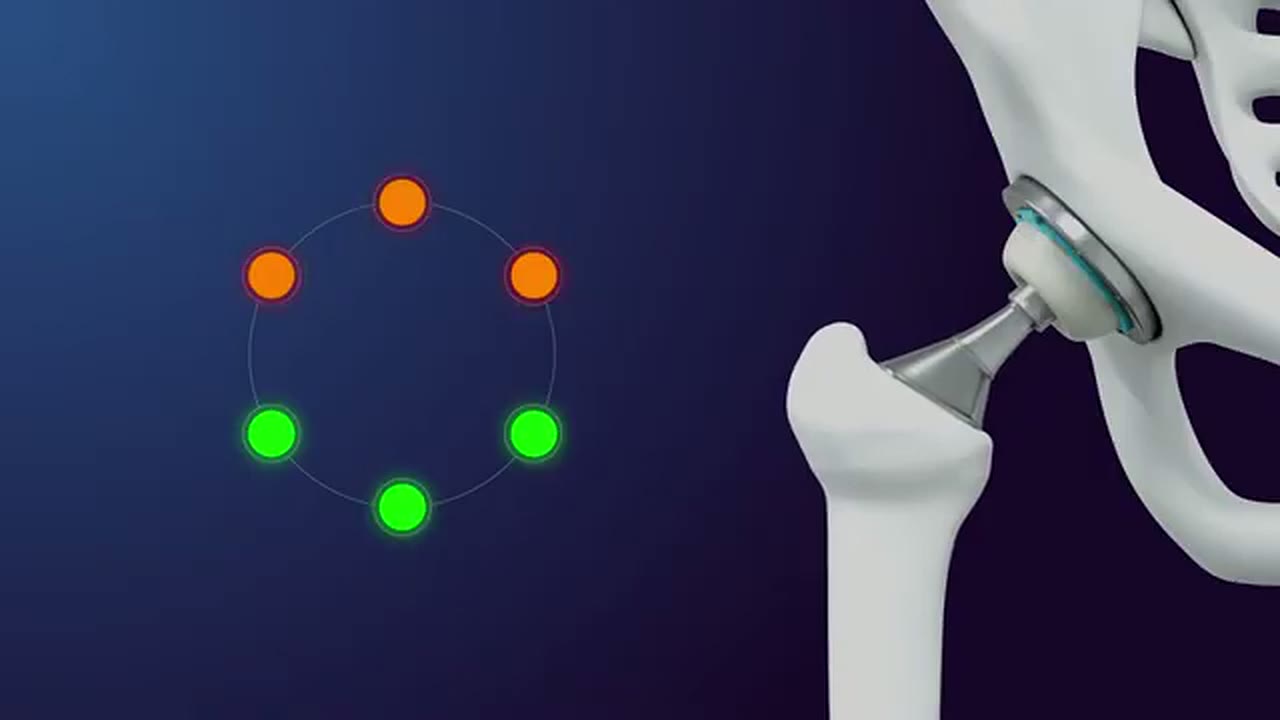
Load shared evenly around the ring.
See how load is distributed.
Select a loading pattern and adjust the applied load to see how six-point feedback relates to the sensing interface of a hip implant.
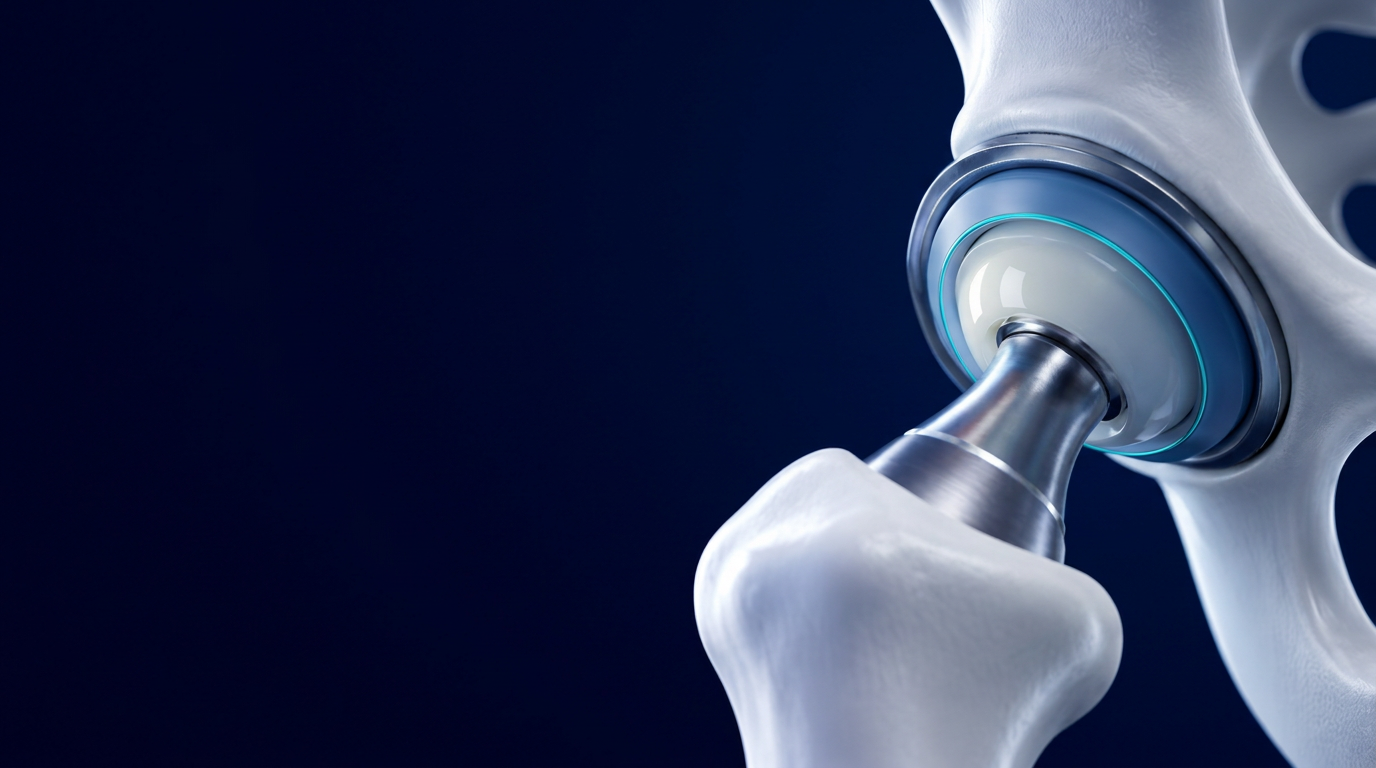 Force-sensing interface
Loading pattern
Relatively even force distribution around the joint interface.
Small structures. Meaningful information.
Thin
Developed for use where space at the joint interface is limited.
Conformable
Microfluidic structures designed to accommodate curved surfaces.
Robust
Published work investigates sensing under demanding mechanical conditions.
Quantitative
Calibrated sensor responses provide force measurement information.
See the science in context.
The ArtioSense technology film explores the sensing concept and its intended application.
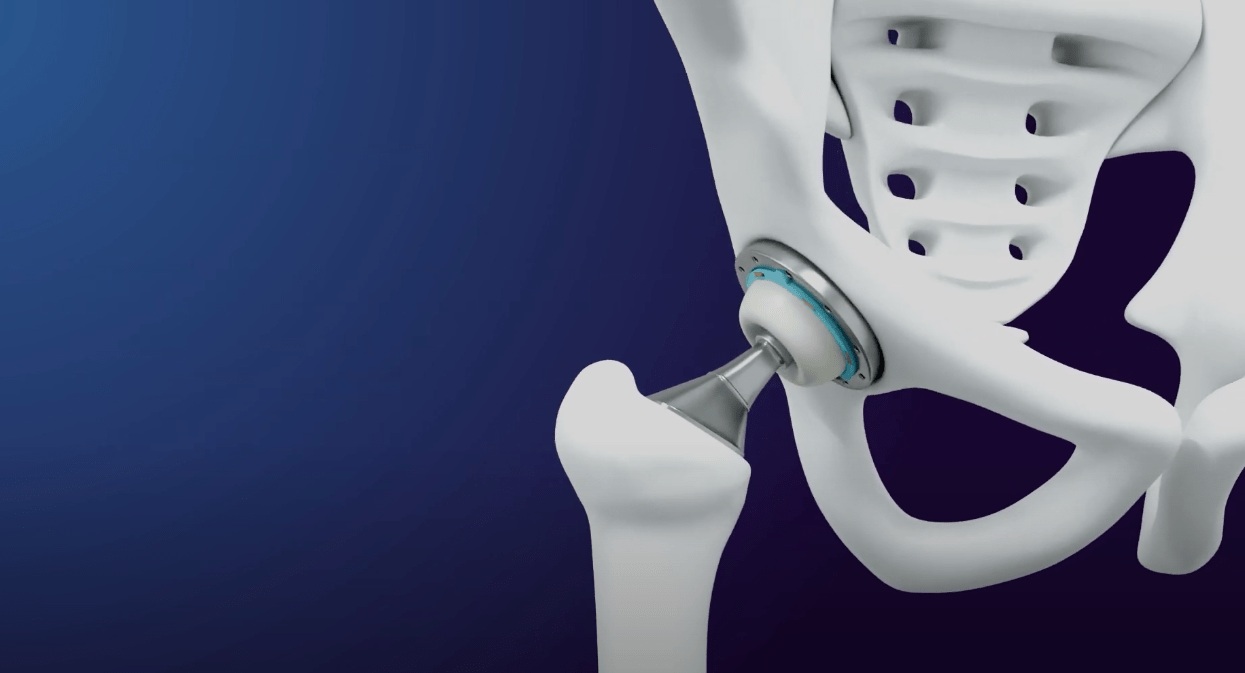 ARTIOSENSE / THE TECHNOLOGY FILM
The sensing layer, in context.
Footage from the original ArtioSense film shows where the sensing layer sits within the hip implant.
Information at the point of assessment.
Measure
Sensitive microfluidic structures respond to applied force.
Interpret
Changes within the sensors can be translated into quantitative measurements.
Inform
Force measurements are intended to support surgical assessment and decision-making.
Integration with surgical trial components, calibration, interpretation and clinical evaluation remain important considerations on the path from laboratory research to an intended surgical aid.
Precision with purpose.
Explore the intended role of force sensing in orthopaedic surgery.